
A. Lange & Söhne Sets Diamonds On The Datograph Perpetual
This 50-piece limited edition run marks the model’s 20th anniversary with appropriate shine.
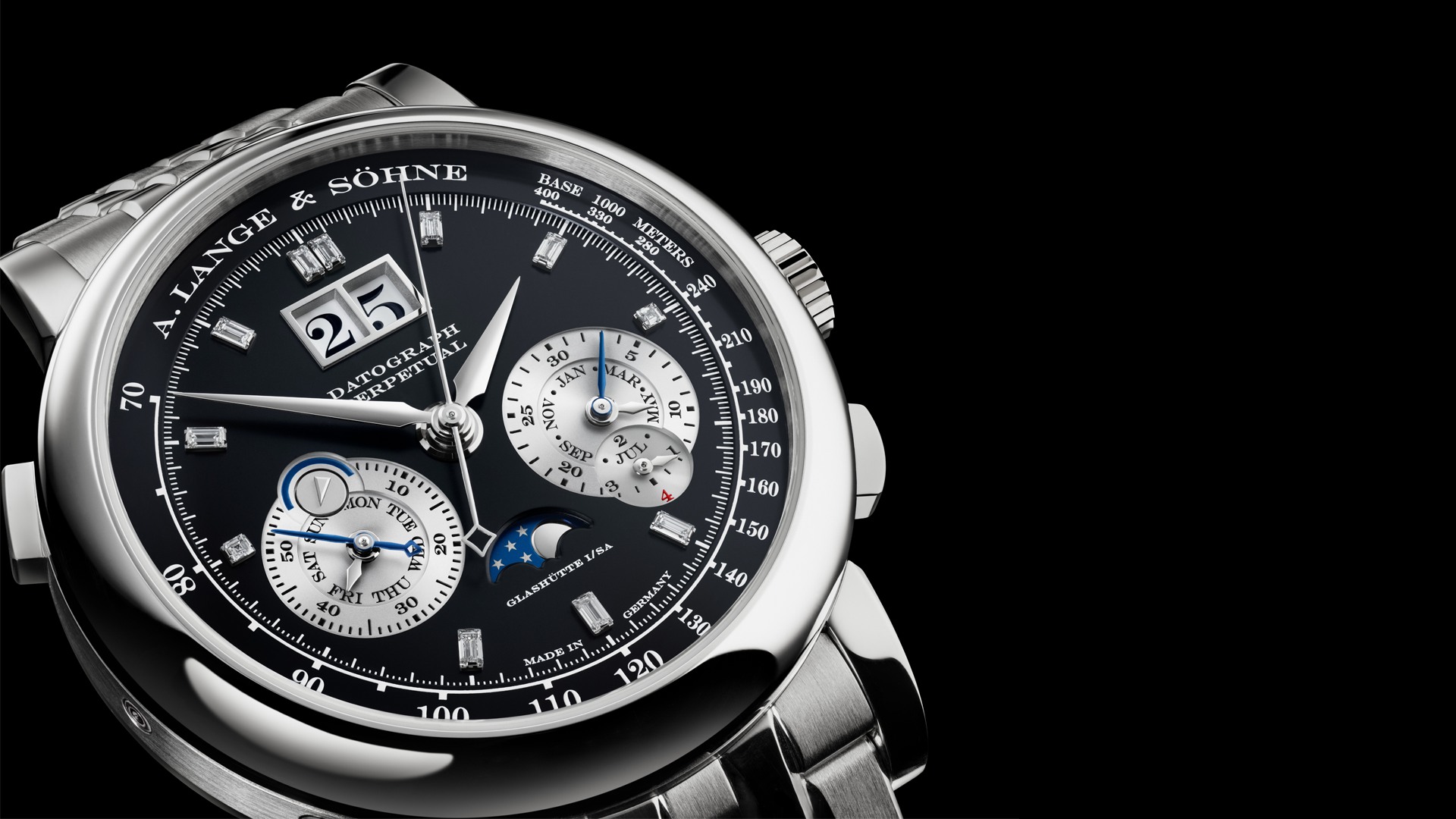
Extra sparkle on an A. Lange & Söhne watch? It is a sight that, though needs a little getting used to, isn’t all that incongruous.
Released on the 20th anniversary of the Datograph Perpetual’s debut, this iteration of the technically muscular double complication rocks with well-deserved shine.
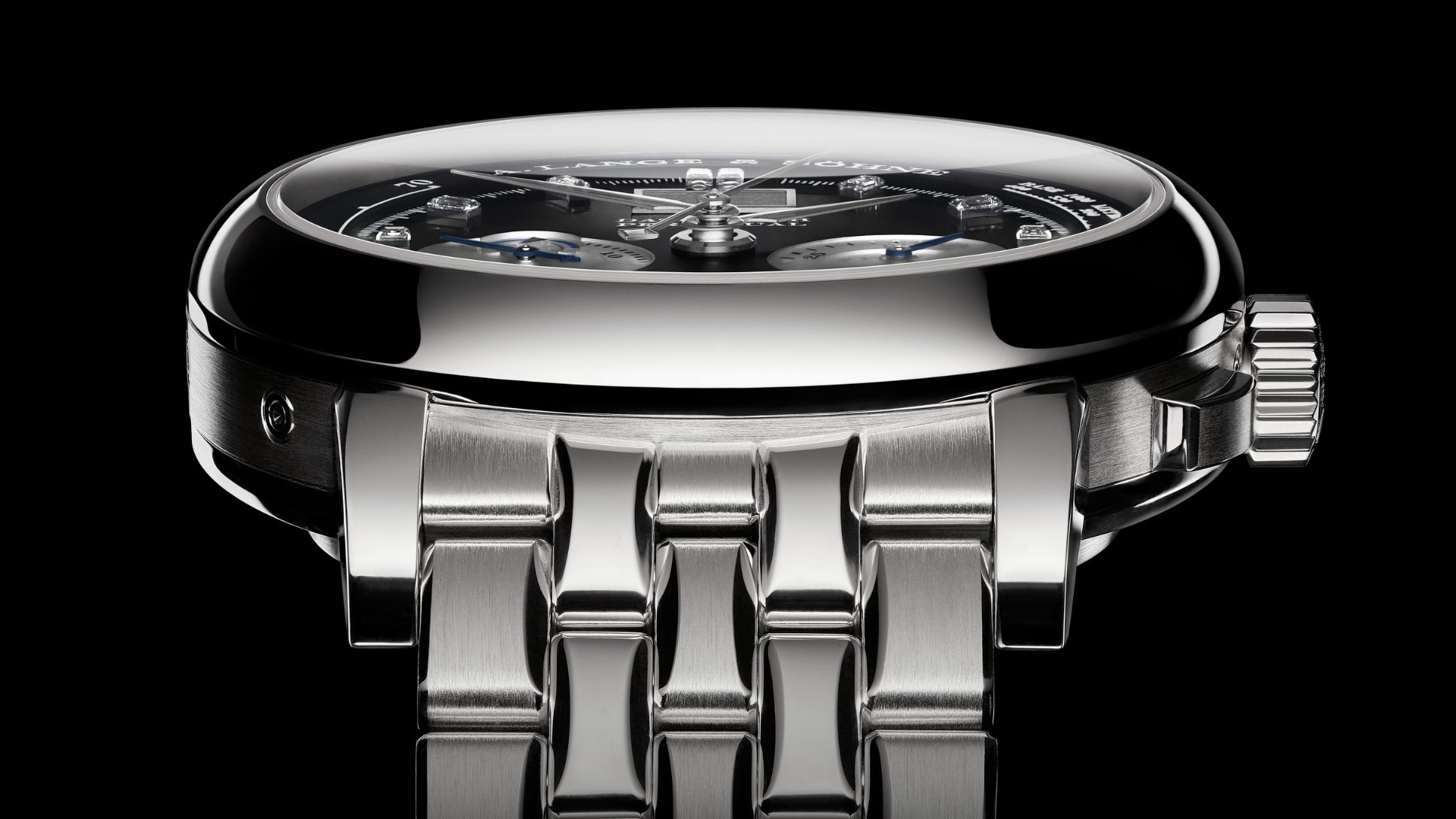
This is courtesy of its 41mm platinum case and matching five-link bracelet, and of the 11 hand-applied baguette-cut diamonds serve as the hour markers.
The Datograph Perpetual arrived in 2006 as the first Lange wristwatch to combine a chronograph and a perpetual calendar with the house’s outsize date.
This milestone edition keeps everything that is esteemed about its formidable engine, and focuses instead on the finery.
But how do the diamonds fare on a dial that already has a great deal to going on?
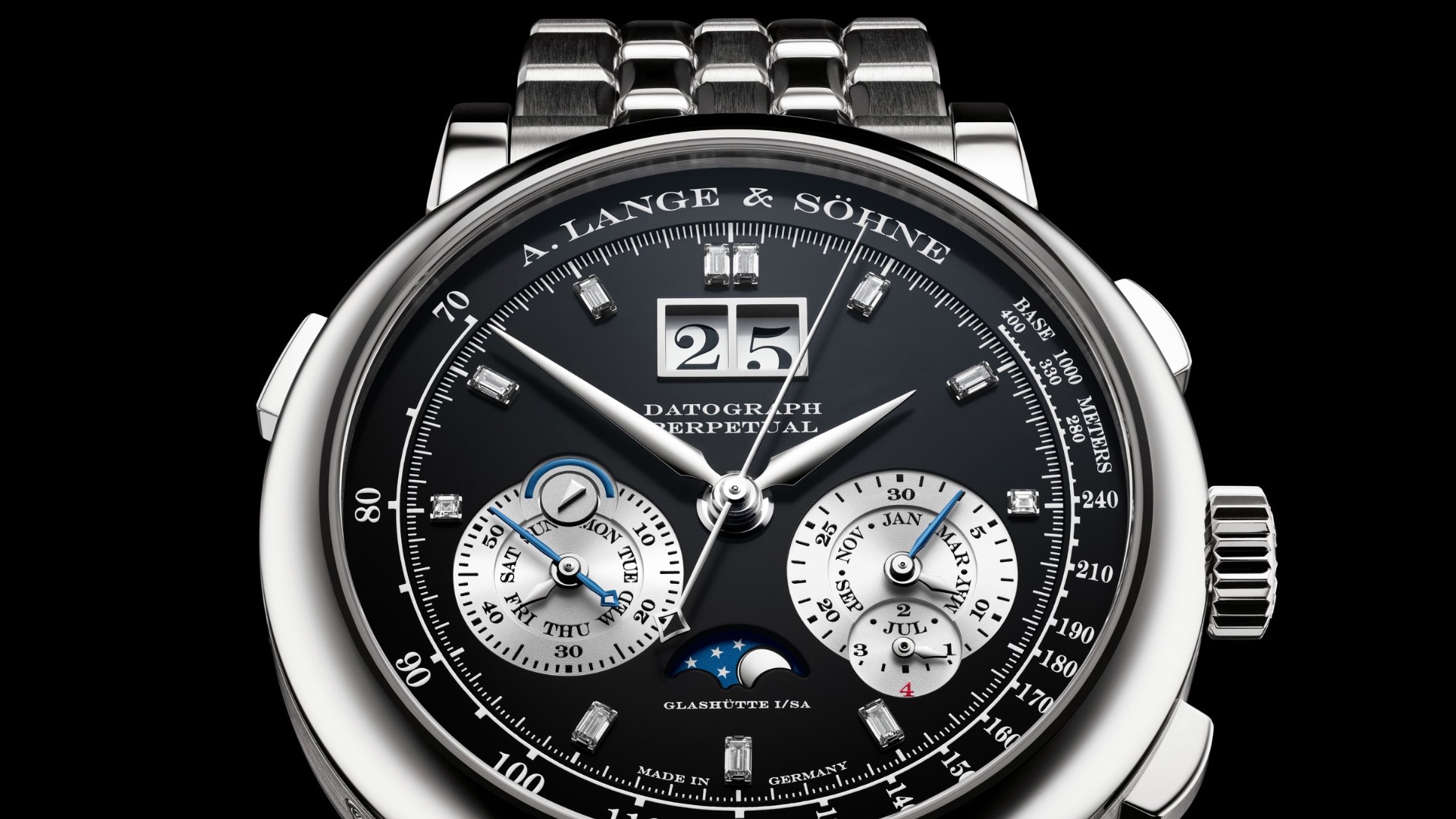
The answer is mostly in the baguette cut, which appears close to the applied baton markers that Lange usually favours.
The number of stones is modest, too. Just the essential 11 diamonds totalling about 0.13 carats, leaving the 4 and 8 o’clock positions bare so the rhodié-coloured sub-dials keep their room.
What keeps the watch from tipping into ostentation is the well-established dial layout as well as the contrast between the black dial and silver sub-dials, which suggest that Lange prioritises legibility above all else.
Platinum, meanwhile, lends quiet gravitas.
Its cool, pristine sheen is easily mistaken for steel from across a room, yet its density gives the watch a weight the wearer feels on the wrist. The five-row bracelet features polished and matte surfaces, with chamfered edges along each link.
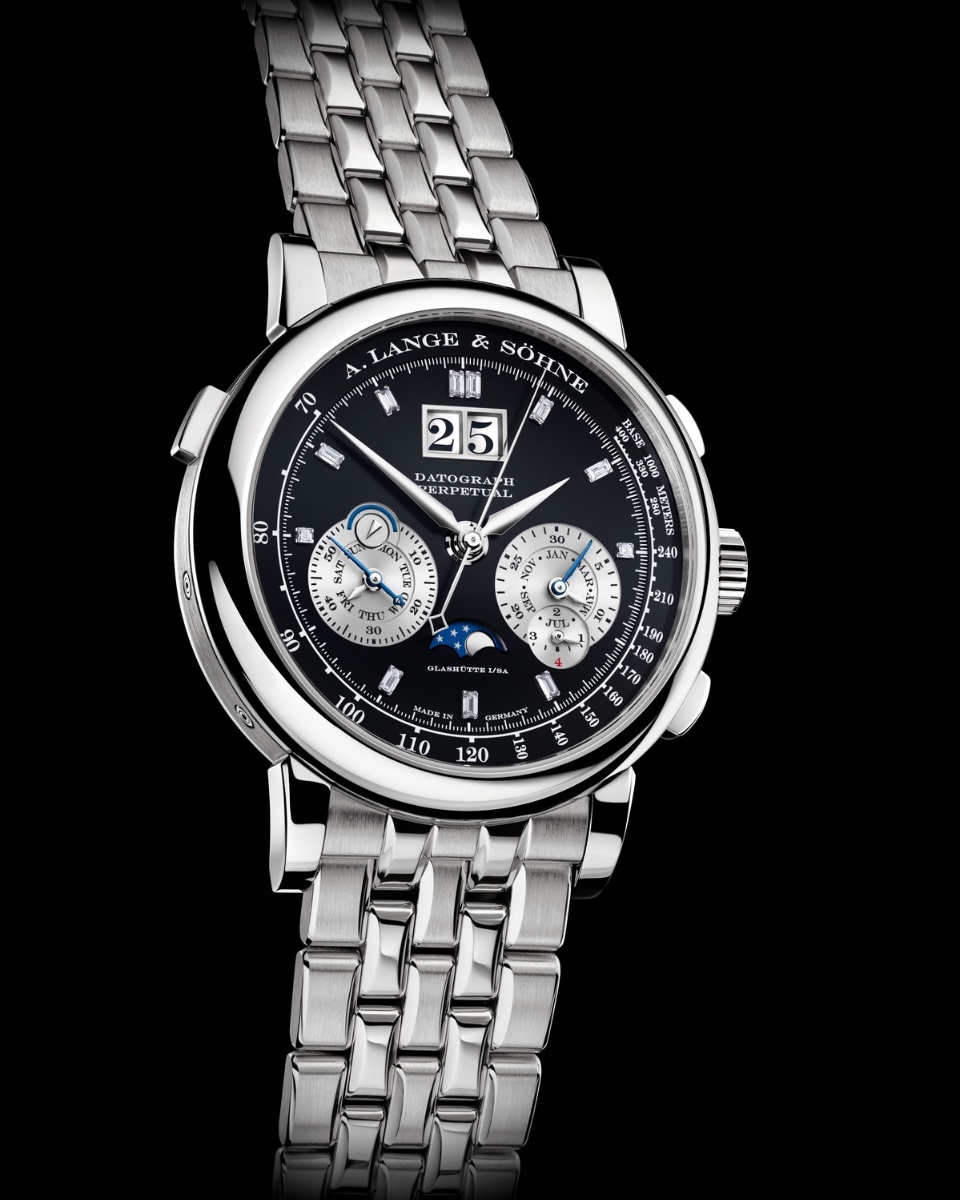
What keeps the watch from tipping into ostentation is the well-established dial layout and its technical prowess.
The best feature of the Datograph Perpetual, as always, is its formidable mechanics.
The column-wheel chronograph measures to a fifth of a second, with a flyback and a minute counter that jumps instantaneously rather than creeps.
The perpetual calendar handles months of 30 and 31 days and leap years, and needs a single one-day correction on 1 March 2100.
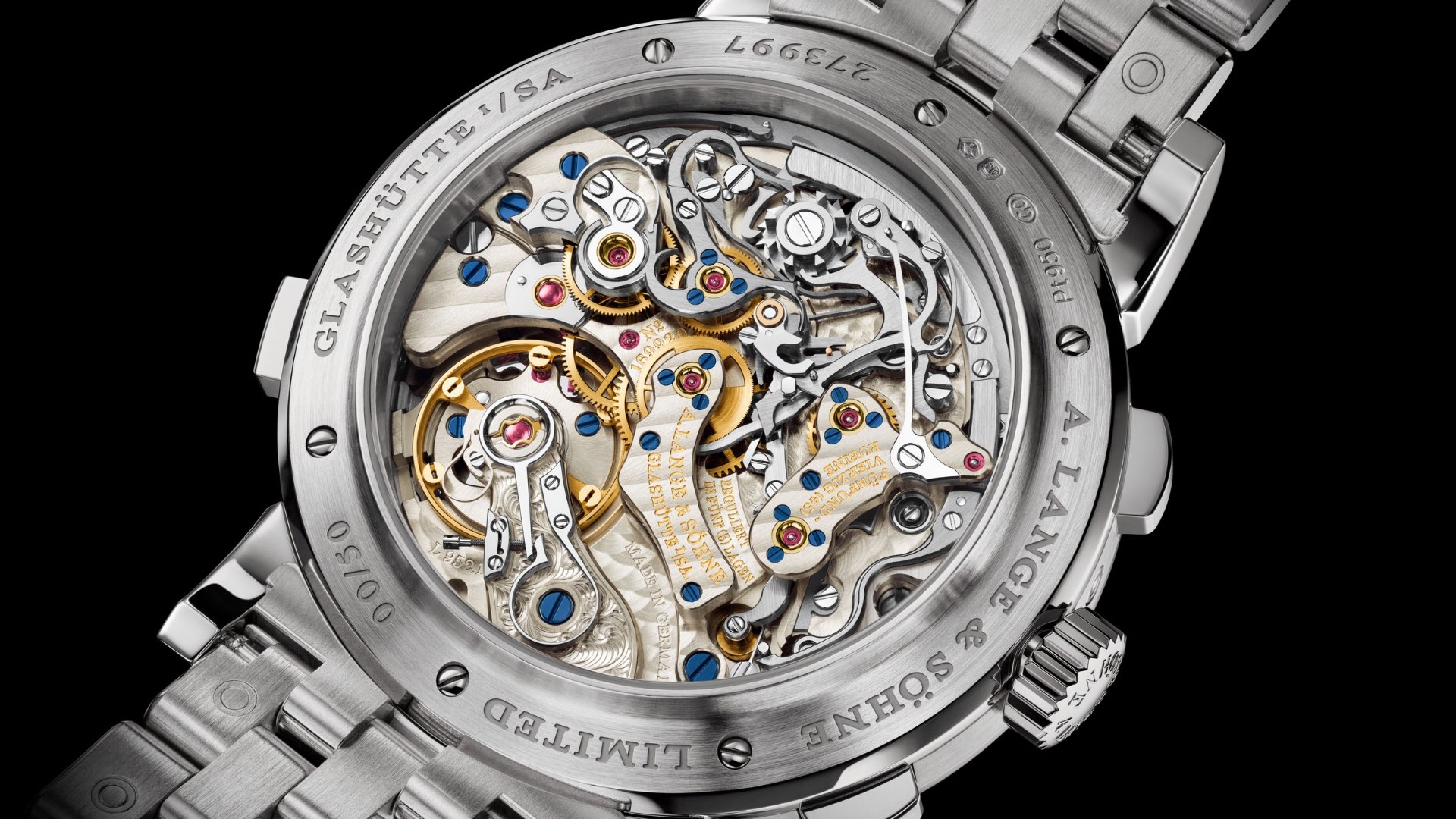
Getting either complication right is hard enough; making both work together in one movement is another story altogether.
As with all of its chronograph movements, Lange built the hand-wound Calibre L952.1 in-house, applying mastery of both complications with exacting finesse.
Twenty years on, the Lange Datograph Perpetual still performs with uncompromising technical intelligence and distinction—but this time with some well-deserved shine.